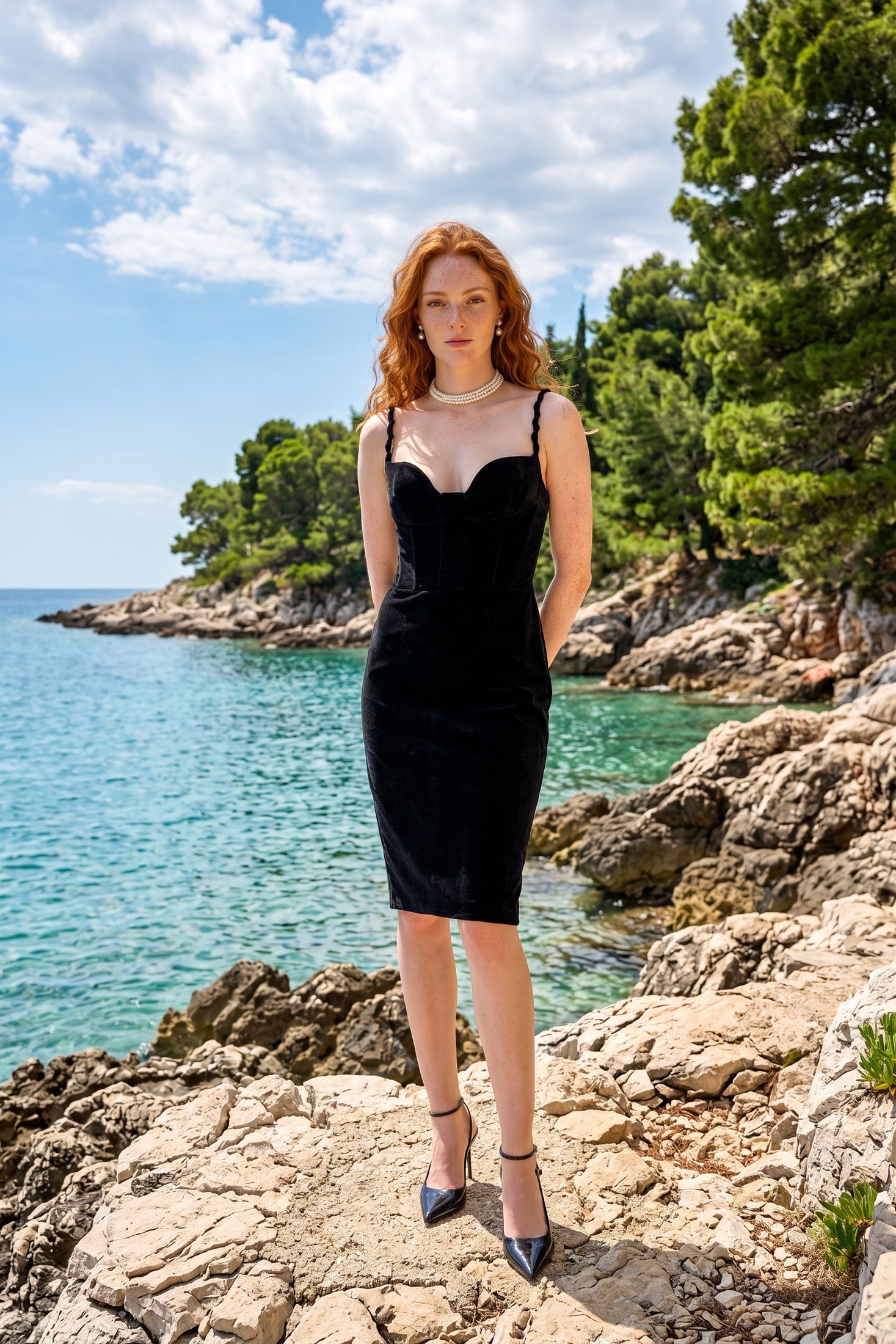
A client asked us a fair question. So many of the photos a batch produces never get used. Why pay for the ones you throw away?
The short answer is that every production line makes things it does not ship. AI product photo quality control is the step that sorts them, and a rejected image is the price of the ones you keep. The longer answer has numbers in it.
A porcelain factory discards one piece in ten at inspection
Take a mug. A factory mixes the clay, casts the shape, fires it once, glazes it and fires it again. At the end a person picks up each mug and looks at it. Some have a pinhole in the glaze. Some warped in the kiln. Some carry a black speck nobody can explain.
A 2023 life cycle study of ceramic tableware measured this in a porcelain factory. About 7 percent of the pieces were lost in the first firing. Another 11 percent were discarded at the end for missing the quality criteria. The mugs in the shop are the ones that passed.
Nobody calls the factory broken. The cost of the rejects sits inside the price of every mug that ships. The inspection is what makes the brand worth paying for.
What a rejected AI image costs
An AI photo shoot has the same shape as that production line. You generate a batch, a person looks at each frame and some frames go in the bin.
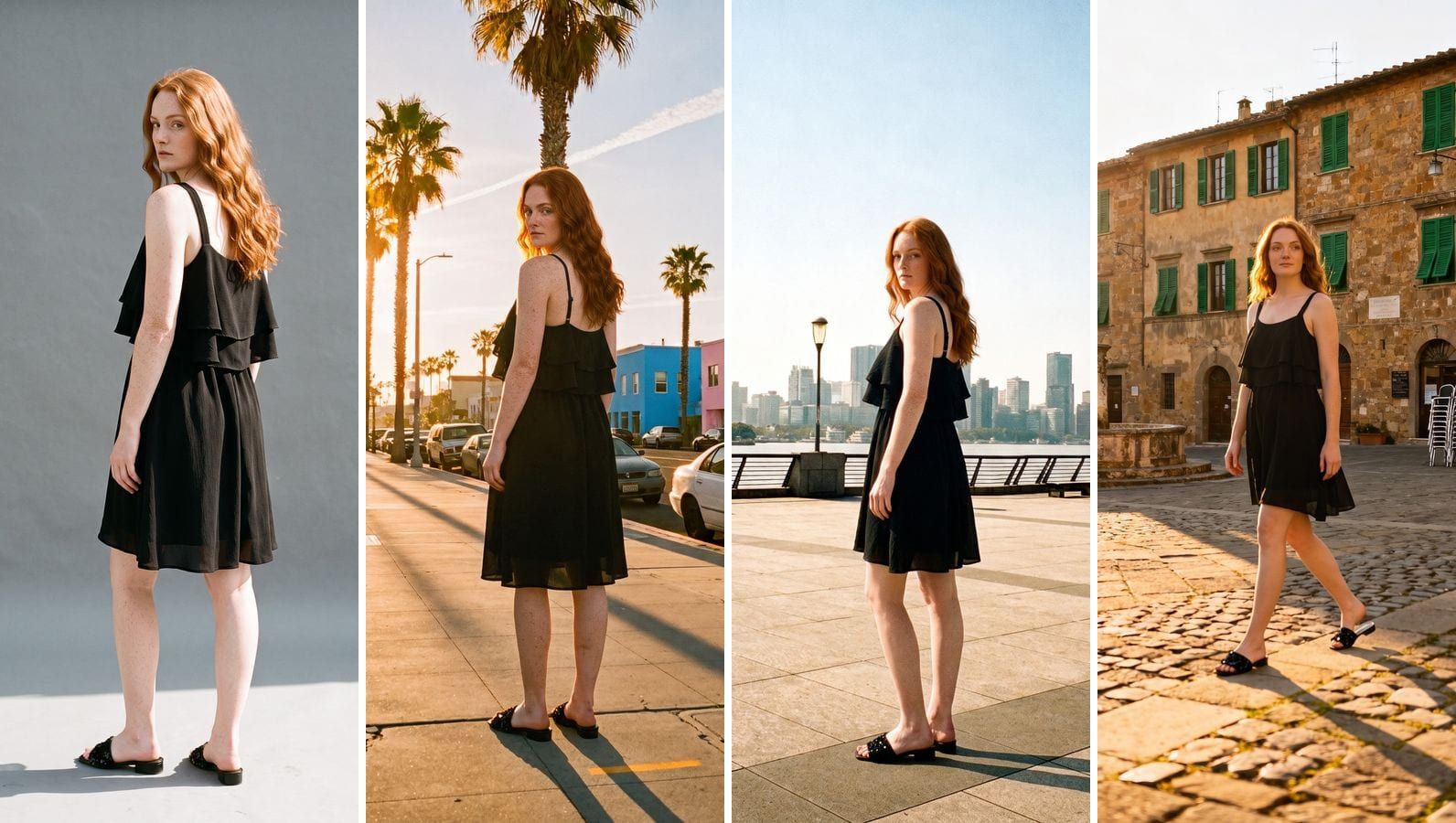
Here is one of ours. For the four location photos on our home page we generated 16 images of one dress. We kept 4 and rejected 7. The other 5 are still undecided. Each 2K image costs 2 credits, so the whole shoot cost 32 credits. On the Starter plan that is about $6.40.
The four frames at the top of this page are the ones we kept.
Divide the cost by the keepers. Each published photo cost $1.60, rejects included. A location shoot in four cities costs flights before anyone opens a camera bag.
So the rejected AI images are a cost of production. They sit inside the price of the four that shipped, and that price is small.
Why a good image generator still misses
The misses fall into a few kinds, and each has a cause.
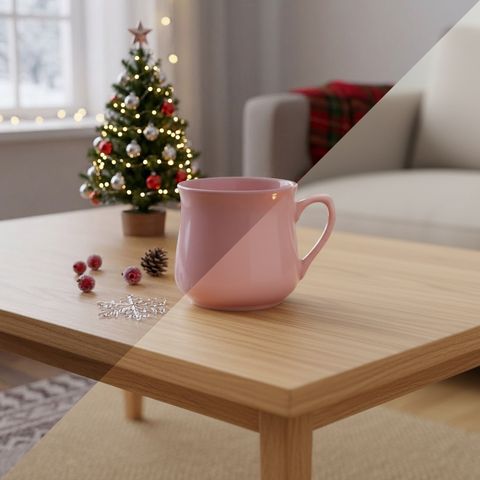
The scene adds something. We asked for a mug on a breakfast table and got a spoon and a wisp of steam with it. The picture was fine. It was also not what the listing shows.
The scene drops something. We dressed a model in a dress and sandals. The first take came back barefoot. The second take had the sandals.
The product drifts. A sleeve merges into the body or a print stretches across a seam. Our piece on garment fidelity in AI fashion photos covers where that happens and why.
The light disagrees. The product is lit from the left and the room from the right. The eye reads that as pasted before it knows why.
None of these is a reason to distrust the batch. Each one is a reason to look at the batch.
How to run an AI image quality check
Compare every frame with the photo of the real product. Shape first, then color, then count the parts. A handle, a strap, a button and a logo are the things a model loses.
Check what the scene added. Props you never asked for are the most common surprise.
Reject fast. A frame that needs an argument is a no.
Fix the prompt before you generate again. If three frames in a row add steam, say “empty” and add steam to the negative prompt. One changed sentence is cheaper than three more rejects.
Decide the angle and the scene on one product before you run the collection. A miss on one image costs 2 credits. The same miss across 200 SKUs costs 400.
Who does the picking
In the app, you do. Every generated image waits for an approve or a reject, and only the approved ones go into the export.
In our done-for-you service, we do. A human editor reviews every image against your product before delivery. Two revision rounds come with every project, and we redo any image that misses your product at no charge.
Either way a person signs off on each photo. The factory has an inspector at the end of the line for the same reason.
References
- Železný, Kulhánek, Pešta and Kočí, LCA case study of ceramic tableware: ecodesign aspects of ceramics production from ancient technology to present factory, Sustainability 15(11), 2023